« Watchmaking Pioneer and Namesake »
The luxury watch brand Graham never fails to thrill its fans with spectacular creations and a decidedly avant-garde design. Today it is a Swiss brand, but its roots lie in England and reach back to the 17th century. We have researched the brand's history for our readers.
"Watchmakers since 1695" – A Tribute to a Great Name in Horological History
Swiss watches from Graham usually stand out on size alone, not to mention their bold, avant-garde design. In recent years, they have won over several tens of thousands of customers and carved out a firm place for themselves in the luxury watch market. But how did this still comparatively young brand come by its quintessentially English-sounding name? The brand's slogan alone – "Watchmakers since 1695" – signals that its founder deliberately placed himself in a long and venerable tradition.
When Biel-based watchmaker and engineer Eric A. Loth launched his own watch collections in 2000, he did so by breathing new life into two brands that were no longer active at the time but had once been illustrious. He named his company, based in the Swiss watchmaking hub of La Chaux-de-Fonds, The British Masters and marketed his watches under two brand names, Graham and Arnold & Son, both of which trace back to famous English watchmakers.
Inspired by the Mechanical Watch Revival
Loth had already found inspiration for his project during the 1990s. After the bitter experience of the quartz crisis, the Swiss watch industry was steadily getting back on track.
Demand for mechanical watches was rising again, and they soon came to be seen as a status symbol and an expression of a stylish way of life.
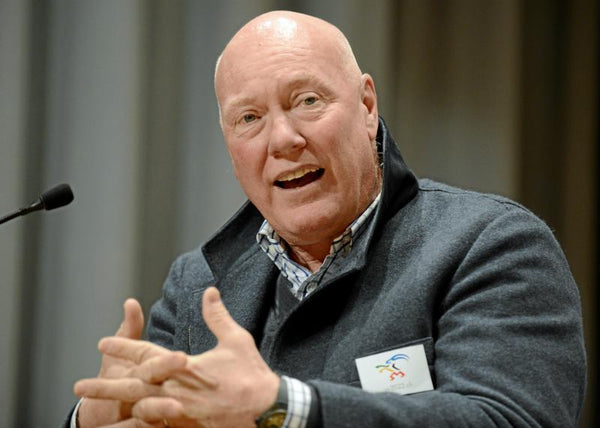
Loth witnessed this period firsthand in various senior positions within the Swatch Group. He saw how his colleague Jean-Claude Biver successfully revived the storied brand Blancpain, and how a whole series of historic watch brands in Glashütte, Saxony, managed to reestablish themselves on the market and soon regained their former stature.
These developments encouraged him, together with several partners and investors, to create and launch his own watch collections and, in doing so, to revive the once-prominent tradition of English watchmaking. He benefited from the fact that a number of brand names belonging to important and innovative British watchmakers of the 17th and 18th centuries were no longer in use and could be acquired, including Arnold, Earnshaw , Graham, Mudge, Quare and Tompion.

Relaunching these brands in their home country – much like the German brands in Glashütte – was not feasible, however, because the necessary infrastructure was lacking there, which is why Loth ultimately chose Switzerland. Today, Graham is the best-selling brand of The British Masters, followed by Arnold & Son. The other brands acquired are currently not in active use.
George Graham – Eminent Watchmaker and Inventor
Born on July 7, 1673, in Horsgill, England, George Graham – whose name is back on the watch market thanks to Loth – remains one of the key pioneers of the modern watch industry, having advanced it decisively with a series of important inventions. After seven years learning the watchmaking craft under Henry Aske in London, he began working for Thomas Tompion in 1695. That same year, Graham joined the "Worshipful Company of Clockmakers," which would name him Master in 1722. He remained a close friend of Tompion, regarded as the "father of English watchmaking," until the latter's death in 1713. He became his partner and also married Tompion's niece.

The close bond between the two great watchmakers even endured beyond death: after he died on November 16, 1751, George Graham was buried in Tompion's grave in Westminster Abbey. Among Graham's groundbreaking inventions is the first deadbeat escapement for pendulum clocks, dating from 1715 and named after him. Five years later came a cylinder escapement based on Tompion's horizontal ("trough") escapement. In 1726, he presented a mercury pendulum that compensated for the effects of temperature, and the following year he completed the zenith telescope that is still housed at the Royal Observatory in Greenwich today.
Graham, who was elected a Fellow of the Royal Society in 1721, was known for a deep distrust of banks and remarkable generosity.
George Graham kept his money in his own premises and lent friends even large sums without charging interest. Thanks to his excellent reputation, he was able to attract a number of talented assistants. Some of them later achieved great renown in their own right, including Jonathan Sisson and John Bird.
Distinctive Watches for Individualists
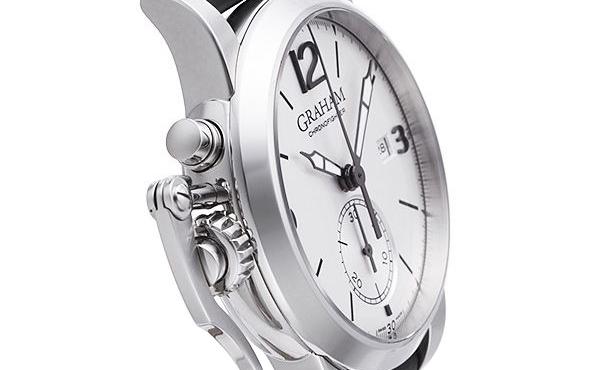
The watches that bear Graham's name today are true eye-catchers. Their unusual design and considerable size naturally draw attention. Some models also feature a striking trigger lever over the crown on the left side.

The model lines released so far include the Chronofighter, the Chronofighter 1695, the Tourbillon Orrery, The Moon, Silverstone, Swordfish, Prodive and various other chronographs. The movements used come mainly from La Joux-Perret and are based on the Valjoux 7750. Stylistically, the creations draw in part on historical timepieces, steampunk elements and modern design trends, combined into an impressive mix.